Loan Programs · Head to Head
Second home vs. investment property: it's about how you'll use it.
Two properties can look identical and still get financed completely differently, because the difference is how you use it, not what it is.
Written by the East Coast Mortgage team
Editorial review: East Coast Mortgage, NMLS #2354674 · Last reviewed
A second home and an investment property can be the exact same kind of house, but lenders draw a real line between them based on intended use, not the property itself. A second home is one you'll personally use for part of the year, a beach house, a mountain cabin, a place near family. An investment property is bought primarily to generate rental income.
That distinction affects your rate, your down payment, and which programs are even available to you, so it's worth getting right before you make an offer, not after.
| Compare | Second Home | Investment Property |
|---|---|---|
| Intended use | Personal use for part of the year | Bought primarily to generate rental income |
| How it qualifies | Similar to a primary residence loan, on your personal income | Can qualify on the property's own rental income (DSCR) instead of yours |
| Rates and down payment | Closer to primary-residence terms, usually better than an investment property | Typically higher, reflecting rental-income risk |
| Occupancy expectations | Available for your own use year-round, not rented out most of the year | No personal-use expectation, financed specifically because it earns rental income |
| Best for | A vacation home, cabin, or place near family you'll actually use | A property bought specifically as a rental or income producer |
General program guidelines only. Your actual terms depend on the lender, your credit, and the property. Not a commitment to lend.
So which one is it?
The test lenders actually apply isn't the property, it's how you'll use it. If you'll personally use the home for real stretches of the year and it's not primarily a rental, second-home financing usually gets you better terms. If the property exists to generate rental income and you won't be using it yourself, it needs to be classified and financed as an investment property, often most efficiently through a DSCR loan that qualifies the deal on the property's own income.
Read the full breakdown of each: Second Home Financing and DSCR Investment Property Loans.
Common questions
What's the difference between a second home and an investment property in a lender's eyes?
A second home is one you'll personally use for part of the year. An investment property is bought primarily to generate rental income. The distinction affects your rate, down payment, and which programs are available.
Can I rent out my second home occasionally?
Occasional personal-use rentals are common, but if the home will be rented out most of the year, it may need to be classified and financed as an investment property instead.
Can I use either of these for my primary residence?
No, both second home and investment property financing are for properties you won't be living in full-time as your main home. A primary residence uses a conventional, FHA, VA, or similar owner-occupied program instead.
Sources
- Fannie Mae: Selling Guide B2-1.1-01, Occupancy Types
General information, not advice for your specific situation. Program rules come from the agencies above and from each lender, and they change. A licensed loan officer confirms what applies to you.
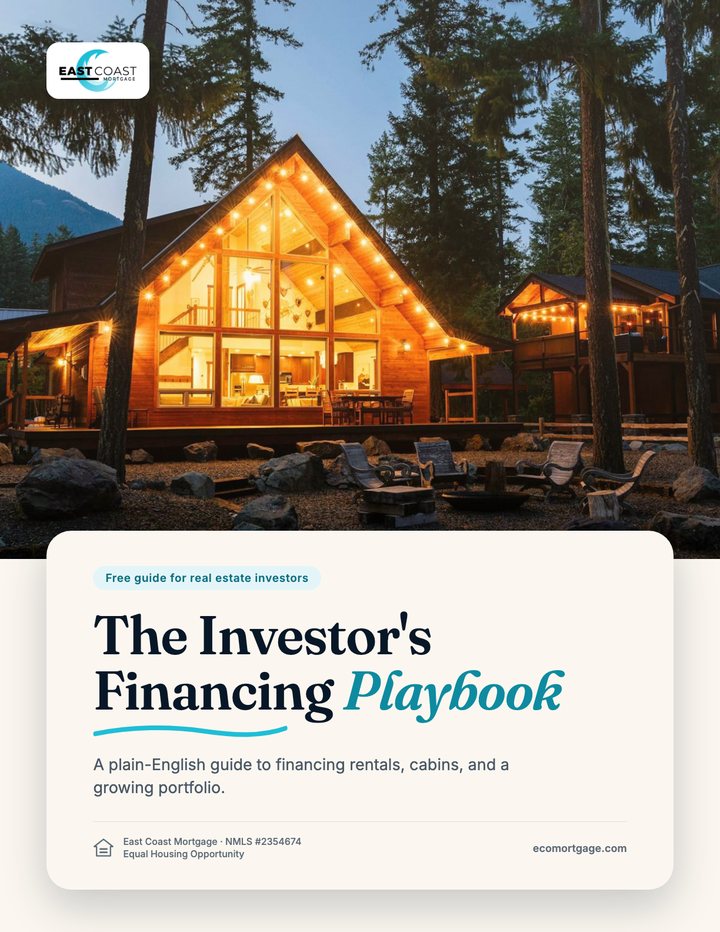
Free guide · real estate investors
The Investor's Financing Playbook
DSCR, cash-out, and how to finance a growing rental portfolio. Instant download, no cost.
Ready when you are
Not sure which one fits? Let's actually run your numbers.
A real, licensed loan officer checks both against your credit, savings, and goals. No obligation, no credit pull to start.
NMLS #2354674 · Equal Housing Opportunity · Not a commitment to lend