

Using Gift Funds for Your Down Payment: How It Actually Works

September 28, 2026 · 3 minute read
Editorial review: East Coast Mortgage, NMLS #2354674 · Last reviewed
If family is helping with your down payment, there's a right way to document it so it doesn't cause problems in underwriting. Here's what lenders actually need to see.
I talk to a lot of buyers who assume that if a parent or family member is helping with the down payment, they just need to hand over a check the week of closing. It doesn't work that way, and the reason isn't that lenders are being difficult. It's that underwriters have to be able to show where every dollar in your transaction came from. A sudden, unexplained deposit is one of the fastest ways to slow down or derail a closing.
The good news is that gift funds are completely normal and allowed on most loan programs, including conventional, FHA, and VA loans. You just have to document them the right way, and the sooner you start that paperwork, the smoother everything goes.
Who Can Actually Give a Gift
Loan programs are specific about who qualifies as an acceptable gift donor. Generally it needs to be a relative, though some programs also allow a fiancé, domestic partner, or godparent. What's not allowed is a gift from someone with a financial interest in the transaction, like your real estate agent or the seller, because that starts to look like a way around arm's-length pricing rules.
If you're not sure whether your situation qualifies, ask before the money moves. It's a five-minute conversation with your loan officer that can save you a headache later.
The Paperwork You'll Actually Need
Almost every lender wants two things: a signed gift letter and a paper trail. The gift letter states the donor's relationship to you, the dollar amount, and confirms it's a gift with no expectation of repayment. That last part matters. If it's a loan disguised as a gift, that's a problem, because it changes your actual debt load.
The paper trail is where people get tripped up. Underwriters generally want to see the money leave the donor's account and land in yours, which means bank statements from both sides showing the withdrawal and the deposit. If the gift is sitting in cash somewhere, or it moves through three different accounts before it reaches you, that's extra explaining you don't need. The cleanest path is a direct transfer, documented on both ends, done well before your closing date so it's already seasoned in your account.
Timing Makes This Easier
The earlier the gift lands in your account relative to your closing, the less scrutiny it typically draws, because underwriters are mainly trying to rule out funds that were borrowed right before closing to make your assets look bigger than they are. If you know family is contributing, it's worth having that conversation and moving the money as soon as you're seriously shopping, not the week before you're set to close.
This is also a good time to loop in your loan officer, because different programs treat gift funds a little differently. FHA and VA loans are generally flexible about gifts covering the entire down payment. Conventional loans sometimes require the borrower to contribute some of their own funds first, depending on the down payment amount and whether it's a primary residence, second home, or investment property. Your loan officer can walk you through what applies to your specific loan.
If family is planning to help you get into a home, don't let the paperwork be an afterthought. Reach out early and we'll tell you exactly what documentation to gather so the gift works in your favor instead of becoming a delay. ECM is licensed in VA, NC, MI, OH, and WV, and you can reach us anytime at (757) 493-1582.
Related loan program
Easier to Qualify For →
A lower credit score and a smaller down payment are OK. A common choice for first-time buyers.
Written by a real loan officer
Lilli Driscoll, NMLS #2485560
About Lilli and their licenses →Have a question about your own situation? That's the whole job.
How we write and review our content
Talk to a Loan OfficerSources
- CFPB: Exploring your loan choices
- CFPB: Conventional loans
- CFPB: FHA loans
General information, not advice for your specific situation. Program rules come from the agencies above and from each lender, and they change. A licensed loan officer confirms what applies to you.



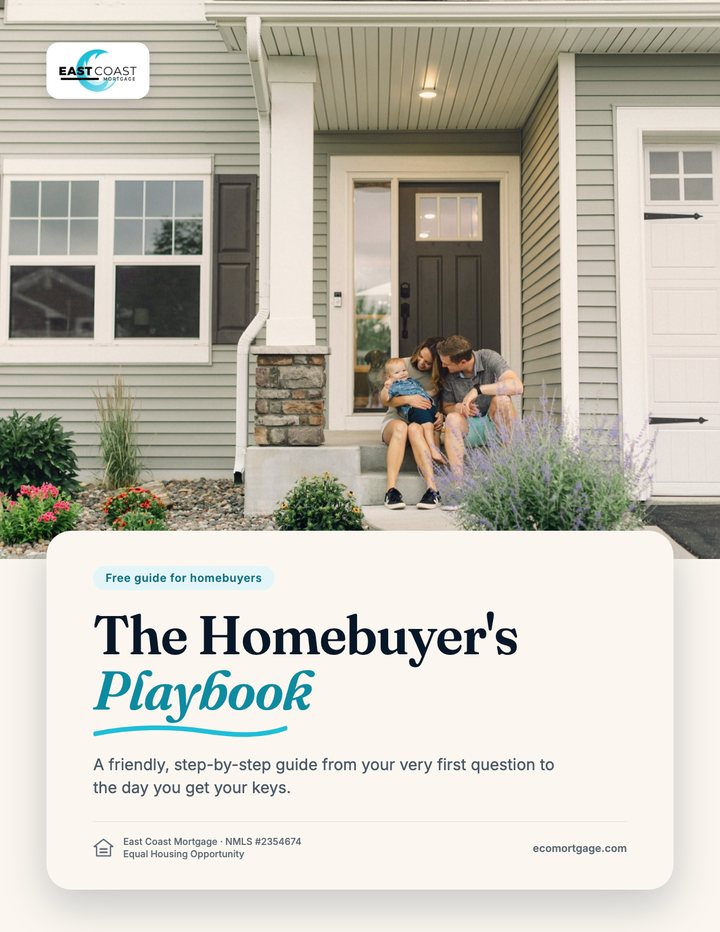
Free guide · homebuyers
The Homebuyer's Playbook
From pre-approval to closing day, in plain English. Instant download, no cost.
Ready when you are
Let's find your yes.
Two quick questions, then a real, licensed loan officer follows up. No obligation, no spam.
NMLS #2354674 · Equal Housing Opportunity · Not a commitment to lend